Bonded & Insured
De Pere, WI

Trusted Roofing Contractor in De Pere, WI Built for Wisconsin Winters

Roofs in De Pere take a beating. You've got subzero January nights, 45 to 55 inches of snow a season, hail in summer, and northeast winds blowing in off the bay of Green Bay. That's why so many homeowners here call about ice dams, lifted shingles and stained ceilings. De Pere Roofing Specialists has spent more than 10 years fixing those problems along the Fox River. We find out why the roof is failing, whether it's ventilation, worn flashing or end-of-life shingles, and we fix the cause instead of covering it up. You'll get a free estimate, an honest recommendation and a written workmanship warranty.

We know the roofs here well. On the steep Victorians off George Street and North Broadway, you'll often find several old shingle layers over plank decking, plus box gutters that need extra care. Many 1990s subdivisions in Allouez, Ashwaubenon and Howard still have their original builder-grade shingles, and those roofs are now reaching the end of their life. We also handle rental properties near St. Norbert College and commercial flat roofs downtown, and we can install metal on farm buildings out toward Denmark and Wrightstown.

  • Bonded and insured roofing contractor
  • More than 10 years serving De Pere and the Fox River valley
  • Free, no-pressure roof estimates
  • Written workmanship warranty on every job
Free Estimate

Request Your Free Estimate

No obligation. Fast, honest quotes.

Prefer to talk? Call (920) 566-8364 — your details are never shared.

Credentials & Certifications BondedInsuredFinancing available
What We Do

Roofing Services for De Pere Homes and Businesses

We offer seven core roofing services, and every one of them is built around what Northeast Wisconsin weather does to a roof. That covers everything from a single cracked pipe boot to a full tear-off on a Victorian, a downtown flat roof or a farm building. We'll explain what we found and recommend what makes sense. If it's a repair and not a replacement, we'll tell you.

Roof Repair

We fix leaks, replace missing or damaged shingles, reseal flashing, swap out cracked pipe boots and repair rotted decking or fascia. The goal is to get your roof back to watertight without replacing more than it needs.

We trace the leak back to its source instead of just patching the stain. Shingles are matched as closely as possible and hand-sealed when it's cold. Flashing is rebuilt with proper step and counter details, not surface caulk.

Repairs are the right call for many De Pere roofs that still have good years left. Good examples are wind-lifted tabs after a summer storm, a cracked boot on a 15-year-old Howard home or ice-dam damage at the eaves of an Allouez Cape Cod.

Best for: Homeowners whose roof is structurally sound and under about 15 to 18 years old, with isolated damage from storms, wear or failed flashing.

Explore
★ Specialty

Roof Replacement

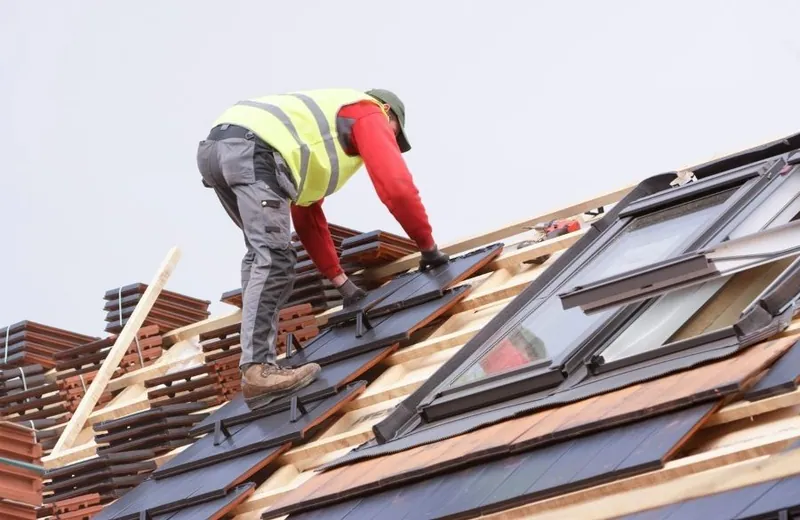
We do full tear-offs down to the deck and inspect and replace damaged sheathing. Then we install a complete new roof system, including ice-and-water shield, underlayment, starter strips, shingles, flashing and balanced ventilation.

Every replacement meets Wisconsin UDC ice-barrier rules and follows the manufacturer's installation specs, so your warranty is protected. We pull the permits De Pere requires, confirm local rules in surrounding communities and protect your landscaping during tear-off.

This is ideal for the many 1990s and 2000s roofs in Ashwaubenon, Bellevue and Suamico that are reaching the end of their life. It's also the right fix for layered roofs over plank decking on older homes along George Street and North Broadway, where code requires a tear-off.

Best for: Roofs over 20 years old, those with two existing layers, widespread hail damage or rotted decking, and owners ready to upgrade to architectural or Class 4 shingles.

Explore

Roof Installation

We install complete roof systems on new homes, additions, garages and outbuildings. That includes asphalt shingles, standing-seam and ribbed steel, and low-slope membranes for flat sections.

We size ventilation to the attic and lay out valleys and flashing for heavy snow. Materials are picked for wind, impact and snow-load performance. HOA color and style approvals are handled before ordering.

This works for new additions in Southwest De Pere and Ledgeview, detached garages in Hobart and Howard, and steel roofing on pole buildings, barns and farmhouses around Denmark, Wrightstown and Seymour.

Best for: New construction, home additions, garages, rural outbuildings and homeowners switching to metal roofing for longevity.

Explore

Roof Inspection

We do a full evaluation of the shingles, flashing, gutters, penetrations, attic ventilation and insulation. You get a written report with photos showing what we found, how urgent each issue is and your options.

We do a hands-on roof walk where it's safe, check the attic for frost, mold and blocked soffits, and document the condition with photos. That's useful for insurance claims, real estate deals and planning your budget.

These are especially valuable after a hail or wind event in Ashwaubenon or Howard, before buying an older home near St. Norbert College and before winter on houses with a history of ice dams.

Best for: Homebuyers and sellers, storm-damage claims, landlords, and owners trying to decide whether to repair or replace.

Explore

Roof Maintenance

We do scheduled tune-ups, including resealing flashing, replacing worn pipe boots, clearing debris from valleys and gutters, fixing small issues and checking attic ventilation, so small problems don't turn into leaks.

We recommend a spring check after snowmelt and a fall check before freeze-up. Each visit includes a photo summary so you can track how your roof is aging year to year.

Maintenance is ideal for De Pere's freeze-thaw cycles. Catching a lifted shingle in October keeps an ice dam from becoming a February ceiling leak. It's popular with landlords who manage rentals near St. Norbert College.

Best for: Roofs in their middle years, rental property owners, commercial buildings and anyone who wants to get the most life out of their roof investment.

Explore
★ Specialty

Commercial Roofing

We repair, maintain and replace low-slope and steep-slope roofs on commercial, mixed-use and multifamily buildings. Systems include EPDM, TPO, built-up roofing and metal.

We check the drainage and slope for ponding, deal with snow-load concerns, inspect seams and penetrations and schedule work around your business hours to keep disruption low.

This serves historic storefronts along downtown Main Avenue and the George Street corridor, flat-roof additions, apartment buildings near campus, and light commercial and agricultural buildings throughout Brown County.

Best for: Property managers, small business owners, landlords, churches and farm operations that need dependable flat or metal roofing.

Explore

Emergency Roofing

We do fast response to active leaks, storm damage, fallen trees and ice dam backups. That includes tarping, temporary sealing and ice removal to stop water from coming in until we can make a permanent repair.

First we secure the roof safely, then we photo-document the damage for your insurer. We're available year-round, including in snow and cold. After that, we schedule permanent repairs as soon as conditions allow.

Emergencies here usually mean summer derecho damage in Bellevue or Suamico, limbs on older Allouez and Astor Park homes, or midwinter ice dam leaks in East De Pere Capes.

Best for: Anyone with water coming in, visible storm openings or ice dam leaks who needs protection right away, before more damage happens.

Explore
Know The Signs

Common Roofing Problems in De Pere and the Green Bay Area

Most roof calls we get in De Pere come back to a handful of local causes: freeze-thaw cycles, poor attic ventilation, storm damage and shingles that have simply aged out. Here's what each problem looks like, why it happens here and how serious it is.

Ice Dams and Winter Leaks Serious

An ice dam is a ridge of ice that builds up at the eaves. Snow melts on the warmer upper roof, runs down and refreezes at the cold edge. Water then pools behind the ice and backs up under the shingles, leaking into walls, ceilings and the roof decking.

Why it's common here

De Pere gets 45 to 55 inches of snow and repeated freeze-thaw swings in late fall and early spring, which is exactly when ice dams form. Many 1950s and 1960s Cape Cods have short knee-wall attics where heat escapes right at the roofline. Older homes near downtown often have no ice-and-water shield at all, because they were roofed before current UDC rules. Soffit vents blocked by insulation make it worse. So even a roof in good shape can leak when the ventilation and insulation underneath it aren't right.

Signs you'll notice
  • Thick icicles along gutters and eaves
  • Water stains on ceilings near exterior walls
  • Peeling paint or damp drywall under windows
  • Ice building up inside gutters
  • Frost or wet spots on the underside of the roof deck
  • Sagging or rotted fascia boards
Local patterns

We see this most on Cape Cods and bi-levels in East De Pere and Allouez, and on Victorians off George Street and North Broadway. It also shows up on complex two-stories in Ledgeview whose valleys drain onto cold eaves. Calls usually peak from January through March.

Our fix: Steam off the ice safely and repair the damaged shingles and decking. Then fix the root cause by installing code-compliant ice-and-water shield and balancing intake and exhaust ventilation.

Hail Damage to Asphalt Shingles Serious

Hail of an inch or larger bruises asphalt shingles, cracks the fiberglass mat and knocks off the protective granules. The roof might not leak right away, but damaged shingles break down faster in UV light and freeze-thaw. That can cut years off the roof's life.

Why it's common here

Northeast Wisconsin gets hail several times a season, mostly from May through August. Older 3-tab shingles across Ashwaubenon, Howard and Bellevue are especially vulnerable. Damage is easy to miss from the ground, and homeowners only have a limited window to file a claim. After big storms, out-of-state crews knock on doors and push quick contracts. That's why a local, documented inspection matters before you sign anything or call your insurer.

Signs you'll notice
  • Dents in gutters, downspouts and roof vents
  • Dark spots where granules are missing
  • Heavy granule buildup at downspout outlets
  • Cracked or fractured shingle edges
  • Dings on siding, window wraps or the AC unit
  • Neighbors filing claims after the same storm
Local patterns

Hail tends to run in swaths across Ashwaubenon, Howard, Suamico and Southwest De Pere. Subdivisions with roofs built at the same time often all need replacement after one storm. South- and west-facing slopes usually show the worst bruising.

Our fix: Do a documented inspection with photos and measurements. Then either make targeted repairs or do a full replacement with Class 4 impact-resistant shingles if the damage is widespread.

Wind-Lifted and Missing Shingles Moderate

High winds can break the sealant bond on shingles, lift the tabs and tear whole pieces off. That leaves bare underlayment or decking exposed. One missing shingle can let water in during the next rain or snowmelt.

Why it's common here

Spring and summer derechos and straight-line thunderstorm winds move across Brown County every year. In fall, strong northeast winds off the bay add more stress. Shingles that were installed in cold weather and never fully sealed are especially at risk. So are aging builder-grade roofs, where the adhesive strips have dried out. Exposed ridges and rakes on two-story homes take the brunt of it.

Signs you'll notice
  • Shingles lying in the yard or driveway
  • Creased or folded tabs
  • Exposed nail heads or underlayment
  • Gaps along ridges and rakes
  • New leaks right after a windstorm
Local patterns

Damage is common on taller homes in Bellevue, Suamico and the Lawrence/Hobart side, where there's less tree cover. Older East Side Green Bay neighborhoods near Astor Park and riverfront homes exposed to open-water winds see it too.

Our fix: Replace missing shingles with matched product, hand-seal lifted tabs and check nail placement. If the damage is widespread, upgrade to a wind-rated shingle system installed to manufacturer specs.

Active Leaks and Storm Openings Emergency

An active leak means water is coming into the home right now. Common causes are a fallen limb, torn flashing, a blown-off section of roof or a failed penetration. Every hour it goes on adds to the damage to insulation, drywall, electrical and framing.

Why it's common here

Summer thunderstorms bring most of De Pere's roughly 30 inches of yearly precipitation, often all at once. Mature trees in older neighborhoods drop limbs during storms. In winter, heavy snow and ice dams can open up leaks even when it's below zero. Problems don't wait for good roofing weather, so emergency tarping and temporary repairs are needed year-round.

Signs you'll notice
  • Dripping water or bulging ceiling drywall
  • Wet insulation or a musty smell in the attic
  • Visible holes or tree damage on the roof
  • Water running down interior walls
  • Light showing through the roof boards
Local patterns

Tree-related damage is most common in established neighborhoods like the St. Norbert College area, Allouez and Astor Park. During thaws and spring storms, flat-roof additions and commercial buildings downtown also see sudden ponding leaks.

Our fix: Do an emergency tarp or temporary seal to stop the water. Then document everything for insurance and schedule a permanent repair once conditions allow.

Failing Flashing, Pipe Boots and Chimney Seals Moderate

Flashing seals the joints where the roof meets chimneys, walls, skylights and vent pipes. Rubber pipe boots crack and metal flashing pulls loose over time. Water then finds its way around the penetration, often far from where the stain shows up inside.

Why it's common here

Big temperature swings, from subzero nights to 80-degree summer days, make metal and rubber expand and contract constantly. Pipe boots on 20-plus-year-old roofs are usually dried out and split. Older brick chimneys downtown often have tarred-over flashing instead of proper step and counter flashing. Newer two-stories have many valleys and penetrations, so there are more places for this to fail.

Signs you'll notice
  • Stains around chimneys or bathroom ceilings
  • Cracked rubber collars on vent pipes
  • Rusty or lifted step flashing
  • Tar or caulk patches around penetrations
  • Damp attic framing near the chimney
Local patterns

We find this all the time on Victorians and foursquares in East De Pere and along Main Avenue. It's also common on 1990s homes in Howard and Ashwaubenon with original pipe boots, and on large Ledgeview homes with several skylights.

Our fix: Replace the pipe boots and install new step and counter flashing, using cricket details where needed. Then seal each penetration properly instead of slapping on surface caulk.

Attic Condensation and Poor Ventilation Moderate

When warm, humid indoor air gets into a cold attic, it condenses on the underside of the roof deck and freezes into frost. When that frost melts, it soaks the insulation and decking. Over time you get mold, rot, nail pops and shorter shingle life.

Why it's common here

In winter, the temperature difference between inside and outside in De Pere can be 60 to 70 degrees, which pushes moisture upward. Insulation often blocks the soffit vents, and older homes may have very little exhaust venting. Clay soils and a high water table near the Fox River add to indoor humidity. Manufacturer warranties also require balanced ventilation, so this problem affects your coverage as well.

Signs you'll notice
  • Frost on roof nails or sheathing in winter
  • Dark staining or mold on attic boards
  • Compressed or damp insulation
  • Rusty nail tips poking through the deck
  • Rippled or wavy shingles
  • Unusually high heating bills
Local patterns

We see this a lot in Cape Cods and bi-levels across De Pere and Allouez, older homes near the river and rentals near St. Norbert College. Bathroom fans that vent into the attic instead of outdoors are frequent culprits.

Our fix: Clear and add soffit intake, add ridge or roof exhaust and reroute bath fans outdoors. Replace any decking that's been damaged by the moisture.

Worn-Out Shingles at End of Life Minor

Asphalt shingles slowly lose their granules, curl, crack and get brittle. At some point, repairs stop being worth it. The roof just doesn't protect the house reliably anymore, and every new storm adds to the risk.

Why it's common here

Large parts of Green Bay, Allouez, Ashwaubenon, Howard, Bellevue and Suamico went up in the 1990s and 2000s with builder-grade 3-tab or early architectural shingles. Those roofs are now 20 to 30 years old, and they're wearing out around the same time. South and west slopes age fastest because of summer sun. Some older homes downtown already have two layers, so code requires a full tear-off.

Signs you'll notice
  • Curling or cupped shingle edges
  • Bald spots and granules in the gutters
  • Cracked or brittle tabs
  • Moss or dark streaking
  • Sagging roof lines
  • Repairs needed every year
Local patterns

Whole cul-de-sacs in Ashwaubenon, Howard and Bellevue are replacing roofs at the same time. Older housing in Kaukauna, Little Chute and East Side Green Bay often has layered roofs that need a careful tear-off.

Our fix: Do a full tear-off to the deck, replace decking as needed and add code-required ice barrier. Then install a new architectural or impact-rated shingle system with balanced ventilation.

Transparent Pricing

How Much Does a Roof Cost in De Pere, WI?

Roofing prices in the Green Bay area depend mainly on the roof's size, how steep and complex it is, what's under the shingles and the materials you choose. Here's what affects your price, along with realistic ranges for common local projects.

Typical Project

Leak or storm repair

Replace wind-damaged shingles, a cracked pipe boot or a section of flashing on a typical De Pere home

$350 – $1,800
Typical Project

Ranch or Cape Cod replacement

About 1,400–1,800 sq ft home in Allouez or East De Pere, single-layer tear-off, architectural shingles, new ice barrier and ventilation

$10,000 – $17,000
Typical Project

Two-story suburban replacement

Complex 30–40 square roof in Howard, Bellevue or Ledgeview with multiple valleys, upgraded to Class 4 impact-resistant shingles

$18,000 – $32,000
Typical Project

Historic home tear-off

Steep Victorian or foursquare near North Broadway or George Street, multiple layers, plank decking repairs and detailed flashing

$22,000 – $42,000
Roof Size and Pitch Primary Factor

Roofs are priced by the square, which is 100 square feet. A simple ranch in Allouez might be 18 to 22 squares. A two-story in Ledgeview with an attached garage can easily go over 35. Steep pitches, like the 10/12 and 12/12 slopes on downtown Victorians, need extra safety equipment and take longer to work on. Even when the footprint is about the same, steeper roofs cost noticeably more per square.

Complexity: Valleys, Dormers and Penetrations Primary Factor

Every valley, dormer, skylight, chimney and vent pipe adds flashing work and labor. Newer two-story homes in Howard and Southwest De Pere often have six or more valleys. Older homes along George Street add turrets and box gutters on top of that. Doing these details right is what keeps water out, so complexity has a big effect on price, often bigger than the shingles themselves.

Tear-Off Layers and Decking Condition Major Factor

Wisconsin code generally limits roofs to two layers, so if there are already multiple layers, a full tear-off is required. That means extra labor and disposal. Older De Pere homes often have plank decking with gaps or rot at the eaves after years of ice dams. Fixing that means replacing sections with new sheathing. We price decking per sheet up front, so a hidden condition doesn't turn into a surprise on your bill.

Material Choice Major Factor

Standard architectural shingles are the most common choice. Class 4 impact-resistant shingles usually add 10 to 25 percent to the cost, but some insurers offer premium discounts for them. Standing-seam steel costs significantly more upfront, while ribbed steel works well for barns and pole buildings. Commercial EPDM and TPO pricing depends on insulation, drainage and membrane thickness.

Ventilation, Ice Barrier and Code Items Secondary Factor

Code-required ice-and-water shield, new drip edge, pipe boots, ridge vents and added soffit intake all add to the cost. They're also what prevent ice dams and protect your manufacturer warranty. Permit fees vary by municipality. HOA approval in subdivisions in Howard, Suamico or Bellevue doesn't usually add cost, but it can affect timing.

Financing is available for qualified homeowners, so you can replace a failing roof now and spread the cost over manageable payments. In De Pere, a new roof with proper ice barrier and ventilation protects your ceilings, insulation and framing from winter water damage. It also helps lower heating loss and makes your home more appealing to buyers.

Local Expertise

Why De Pere Homes Need a Roofer Who Knows Northeast Wisconsin

De Pere sits about 5 miles south of the bay of Green Bay, and that location shapes how roofs here age and fail. Our winters, storm season, mix of housing ages and local permit rules all affect what a good roof job looks like in Brown County.

Climate: Freeze-Thaw, Heavy Snow, Hail and Wind

De Pere has a humid continental climate. January lows average in the single digits, and every winter has some subzero nights. Snowfall usually runs 45 to 55 inches a season, and cold air coming over the bay and Lake Michigan adds extra snow events. When warm air leaks out of the attic, it melts snow on the upper roof. That water then refreezes at the cold eaves and forms ice dams. Brown County's design ground snow load is roughly 40 to 50 psf, so wet March snow drifting onto garages and low-slope additions can strain older rafters. From May through August, hail of an inch or more bruises shingles and dents vents. Straight-line thunderstorm winds and fall northeasters off the bay tear shingles loose. On top of that, shingle sealant strips need warm sun to bond, which packs most installations into April through November.

Built Environment: 1880s Victorians to 2000s Two-Stories

Before 1890, East and West De Pere were two separate cities, so you'll find older homes on both sides of the river. Near the George Street and Main Avenue bridges there are Queen Annes, foursquares and gabled worker cottages. Their steep roofs have turrets, dormers and box gutters, and the shingles are often layered over plank decking. Between WWII and the 1970s, the city filled in with ranches, split-levels and Cape Cods. Those Capes have short knee-wall attics that are prone to ice dams. Since the 1990s, larger two-story homes with many valleys have gone up in Southwest De Pere, toward Ledgeview and on the Lawrence/Hobart side. Across Ashwaubenon, Allouez, Howard and Bellevue, many 3-tab and early architectural roofs from that era are now 20 to 30 years old. They're showing curling, granule loss, failed pipe boots and missing ice-and-water shield.

Codes, Permits and HOA Rules

Wisconsin's Uniform Dwelling Code requires ice-barrier underlayment on homes in Brown County. It has to run from the eave edge to at least 24 inches inside the exterior wall line. Roofs normally can't go beyond two shingle layers. If there are already two layers, or if the decking is damaged or spaced, the roof has to be torn off down to the deck. De Pere's Building Inspection department generally requires a reroofing permit. Green Bay, Ashwaubenon, Allouez, Howard, Bellevue, Suamico and Hobart each set their own requirements, so we check with each municipality before work starts. Many subdivisions in De Pere, Howard, Suamico and Bellevue have HOA rules on shingle color and style. Homes in the North Broadway historic area may need design review for visible exterior changes. Wisconsin law (Wis. Stat. 100.65) also bars contractors from promising to pay or rebate your insurance deductible.

What Local Homeowners Value

De Pere has more than 25,000 residents and is one of Brown County's fastest-growing cities. Homeownership rates are high, and many owners plan to stay for decades. That's why a lot of them choose architectural or Class 4 impact-resistant shingles instead of the cheapest option. People here look things up online, but they still trust a neighbor's referral more than an ad. A roof that's done right, backed by a written warranty and installed by a crew that'll still be around next year matters more to them than the lowest bid. That's even more true after a storm brings in out-of-state crews.

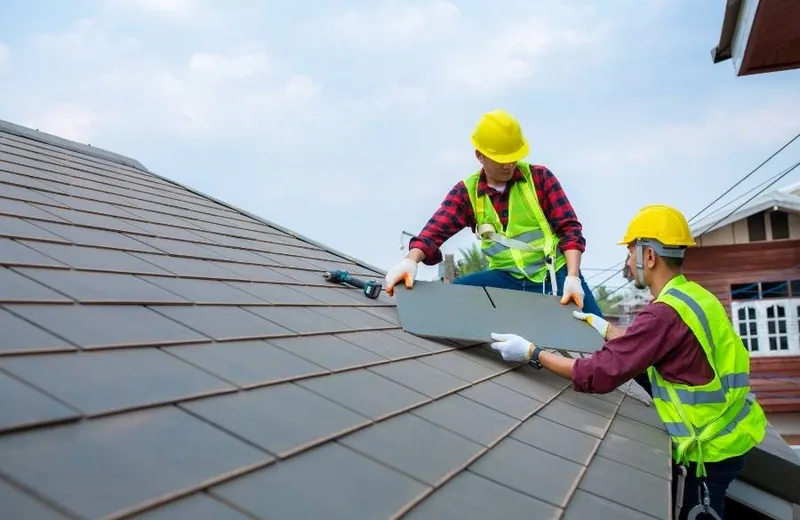
De Pere Roofing Specialists Roofing contractor in De Pere project in De Pere, WI (1)
De Pere, WI
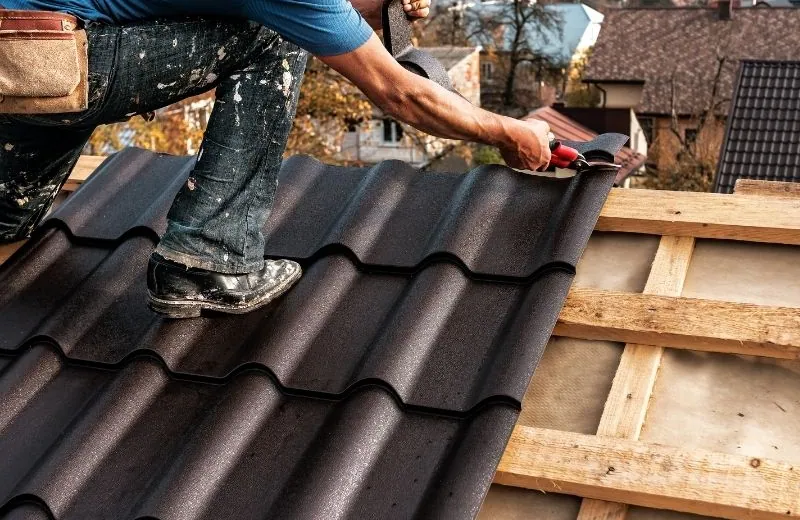
De Pere Roofing Specialists Roofing contractor in De Pere project in De Pere, WI (2)
roofing
Talk to a Local Expert
The De Pere Roofing Specialists Difference

Why De Pere Homeowners Choose De Pere Roofing Specialists

Local Roofers Who Know Fox River Roofs

We've worked on roofs in De Pere and the surrounding area for more than 10 years. That covers steep Queen Annes near the George Street bridge, Cape Cods with knee-wall attics in Allouez and big multi-valley two-stories in Ledgeview. We know where ice dams form, which subdivisions went up with the same aging shingles and which communities handle permits differently. That local knowledge helps us diagnose problems accurately the first time. You'll also find us here next year if you ever have a question about your roof.

Bonded and Insured for Your Protection

A roof project means people working at height on your property, so coverage matters. De Pere Roofing Specialists is bonded and insured, which protects you, your home and our crew if something goes wrong. Before any work starts, we're happy to give you proof of coverage. It's one of the simplest ways to tell a stable local contractor from a crew that showed up after the last hailstorm and might be gone before the first warranty question comes up.

We Fix the Cause, Not Just the Symptom

A lot of Brown County roof leaks aren't caused by the shingles. Winter ice dams usually come from blocked soffits, short attic insulation or bath fans venting into the attic. Hidden flashing failures cause chronic stains. We check the attic and the whole roof system before making any recommendation. That way, the money you spend actually solves the problem instead of putting off the same repair until next winter.

Honest Recommendations and Transparent Pricing

If a $500 repair will get you five more good years, that's what we'll tell you. You'll get a written, itemized estimate that spells out the materials, scope and how we price possible hidden conditions like rotted decking or extra shingle layers. That's common on older homes along the river. We don't use pressure tactics or limited-time scare pricing. Our estimates are always free, and many De Pere customers come to us through neighbors' referrals.

Written Workmanship Warranty

Every job comes with a written workmanship warranty, whether it's a pipe boot or a full replacement. We also install to manufacturer specifications, including starter strips, nail patterns, ice-and-water shield and balanced ventilation, because skipping those steps can void a shingle warranty. You'll know exactly what's covered, and you'll be dealing with a local company that stands behind the work.

Storm and Insurance Claim Guidance Done Right

After hail or wind, we document the damage with detailed photos and measurements you can share with your insurer, and we'll explain what we found in plain language. We follow Wisconsin law, which means we never offer to cover or rebate your deductible. That's prohibited under Wis. Stat. 100.65. It's the honest, local alternative to out-of-state storm crews.

Year-Round Emergency Response and Financing

Roof problems don't wait for good weather. We respond to active leaks, storm openings and ice dam backups all year, including in snow. When a bigger project can't wait, financing is available to help you replace an aging roof now instead of risking water damage. That includes upgrading to impact-resistant or architectural shingles.

Simple & Transparent

Our Roofing Process, From First Call to Final Cleanup

Every project follows the same five steps, so you know what's happening, what it costs and when we'll be on your roof, whether it's a small repair or a full replacement.

Free Inspection and Consultation

Usually scheduled within a few days; same-day for emergencies
  • Exterior roof walk and photo documentation
  • Attic check for ventilation, insulation and moisture
  • Discussion of your goals, budget and timeline
  • Storm damage noted for possible insurance claims

Local note: In winter we may document from the attic and ground until snow conditions make a safe roof walk possible.

Written Estimate and Recommendations

Typically within 1–3 business days
  • Itemized scope with materials and options
  • Clear repair-versus-replace recommendation
  • Notes on possible hidden conditions like plank decking or extra layers
  • Financing options explained if you need them

Local note: On older De Pere homes, we explain upfront how decking replacement is priced so there aren't any surprises.

Permits, Approvals and Scheduling

1–3 weeks depending on season and municipality
  • Permit pulled where required, including De Pere reroof permits
  • HOA color and style approvals coordinated
  • Materials ordered and delivery scheduled
  • Install date confirmed with you

Local note: Late summer and fall backlogs are real here, so booking in spring helps lock in your spot.

Installation Day

1–3 days for most homes; longer for complex or commercial roofs
  • Landscaping, siding and driveway protected
  • Tear-off and decking inspection and replacement
  • Ice-and-water shield, underlayment, shingles and flashing installed to spec
  • Ventilation balanced and penetrations sealed

Local note: Below about 40°F we hand-seal shingles and handle materials carefully to protect the warranty.

Final Walkthrough and Warranty

Same day as completion
  • Magnetic nail sweep and full debris cleanup
  • Final inspection and photos
  • Walkthrough with you to answer questions
  • Written workmanship warranty delivered

Local note: We'll also point out any attic or gutter issues that could cause ice dams next winter.

Trusted Locally

A Local Roofing Contractor You Can Count On

Years Serving De Pere
10+
De Pere, WI

For more than 10 years, homeowners, landlords and business owners along the Fox River have trusted De Pere Roofing Specialists for honest advice and careful workmanship. A lot of our work comes from neighbors recommending us to neighbors.

20-Mile
Service Radius
$0
Cost for Estimates
Written
Workmanship Warranty
BondedInsuredFinancing available
Where We Work

Roofing Service Areas Around De Pere and Brown County

We're based in De Pere and serve homes, businesses and farms within about 20 miles. That includes older riverfront neighborhoods, fast-growing suburbs and rural townships, and we understand each community's housing, permit process and typical roof problems.

De Pere and the Fox River Core

De PereAllouezAshwaubenonGreen BayHobart

Northern Suburbs

HowardSuamicoBellevue

Fox Cities Edge and Rural Communities

WrightstownKaukaunaLittle ChuteDenmarkSeymour

We serve properties within roughly a 20-mile radius of De Pere, including the Town of Ledgeview and the Town of Lawrence. If you're not sure whether you're in range, just call and we'll let you know. Not sure if we cover your area? Call (920) 566-8364.

Find Us

Serving De Pere, WI & Nearby

444 Reid St 300 01, De Pere, WI, 54115 · Mon-Sun: 7:00 am – 7:00 pm

De PereAllouezAshwaubenonGreen BayHobartHowardSuamicoBellevueWrightstownKaukaunaLittle ChuteDenmarkSeymour
Questions & Answers

De Pere Roofing FAQs

How much does a new roof cost in De Pere?

Most asphalt shingle replacements on De Pere homes cost about $10,000 to $32,000. Simple ranches and Cape Cods are usually toward the lower end, and complex two-stories with Class 4 shingles toward the higher end. Steep historic homes with multiple layers and plank decking can go over $40,000. The biggest factors are roof size, pitch, the number of valleys and penetrations, decking condition and your material choice. Small repairs usually run a few hundred dollars to around $1,800. We give free, itemized written estimates, so you'll see exactly what's included before you decide anything.

How long does a roof replacement take?

Most single-family replacements in De Pere take one to three days once we're on site. Large or complex roofs, historic homes with multiple tear-off layers and commercial projects can take longer. The bigger variable is getting on the schedule. The short Wisconsin roofing season, roughly April through November, leads to backlogs in late summer and fall. Permits and HOA approvals can add one to three weeks. If your roof is aging, booking a spring inspection gives you the best chance at the install date you want.

Do I need a permit to replace my roof in De Pere?

Yes. De Pere's Building Inspection department generally requires a permit for reroofing, and we handle it as part of your project. Surrounding communities like Green Bay, Ashwaubenon, Allouez, Howard, Bellevue, Suamico and Hobart each set their own rules, so we check with the right office before starting. Wisconsin's Uniform Dwelling Code also requires ice-barrier underlayment in our area and generally limits roofs to two shingle layers. Homes in the North Broadway historic area may need design review, and many subdivisions need HOA approval for shingle color.

How can I prevent ice dams on my roof?

The most reliable way to prevent ice dams is to keep the roof deck cold and evenly ventilated. Make sure soffit vents aren't blocked by insulation, add enough attic insulation, seal air leaks from the living space and balance intake with ridge or roof exhaust. Bath fans should vent outdoors, not into the attic. Code-compliant ice-and-water shield at the eaves gives you a backup layer if a dam forms anyway. Raking snow off the lower few feet of the roof helps too, but avoid chipping at ice with tools. That damages shingles.

When should I repair versus replace my roof?

Repair usually makes sense when the roof is under about 15 to 18 years old and the damage is limited to a few shingles, a pipe boot or a flashing detail. It's time to think about replacement when shingles are curling or losing granules across whole slopes, leaks keep coming back, the roof is 20 to 30 years old or hail has bruised large areas. That describes many 1990s and 2000s roofs in Ashwaubenon, Howard and Bellevue right now. An inspection with photos will show you which category your roof falls into.

Should I call my insurance company or a roofer first after a hailstorm?

It usually helps to have a local roofer inspect first so you know whether there's real damage worth claiming. We'll photograph and document hail bruising, dented vents and wind damage, and you can share that with your insurer. By Wisconsin law, contractors can't promise to pay or rebate your deductible, so be cautious with anyone who offers that. Also be careful with out-of-state crews that show up after a storm. Make sure whoever you hire is bonded, insured and local enough to honor the warranty later.

Can you replace a roof in the winter?

Yes, in many cases. But cold weather requires extra care. Below about 40°F, shingle sealant strips don't bond on their own, so we hand-seal the shingles and handle materials carefully to prevent cracking. Snow and ice can affect scheduling and safety, so some winter jobs move around based on the forecast. If your roof is leaking in January, we'll tarp it or make a temporary repair right away. Then we can either do the permanent repair during a suitable weather window or wait until spring.

What warranty comes with your roofing work?

Every job comes with a written workmanship warranty from De Pere Roofing Specialists that covers our installation. New shingle systems also carry the manufacturer's material warranty. Manufacturers usually require proper installation to keep that coverage valid, including starter strips, correct nail patterns, ice-and-water shield and balanced ventilation. We install to those specifications on every roof so your manufacturer coverage stays valid. We'll go over the details of both warranties when we present your estimate.

Get Your Free De Pere Roof Estimate Today

Whether you're dealing with an ice dam leak, fresh hail damage or a 25-year-old roof that's done, a local, bonded and insured De Pere roofer can tell you exactly where things stand. And it won't cost you anything.

  • Free, no-obligation roof inspection and written estimate
  • Photo documentation for storm and insurance claims
  • Honest repair-versus-replace recommendations
  • Code-compliant installation with ice-and-water shield and balanced ventilation
  • Permits and HOA approvals handled for you
  • Written workmanship warranty on every project
  • Financing available for qualified homeowners

Serving De Pere, Green Bay, Ashwaubenon, Allouez, Hobart, Bellevue, Howard, Suamico, Wrightstown, Kaukauna, Little Chute, Denmark and Seymour, within about 20 miles of De Pere.

Water coming in right now? Call us for emergency tarping and leak response, any season, including in snow.

Bonded • Insured

Call (920) 566-8364 Free Estimate